

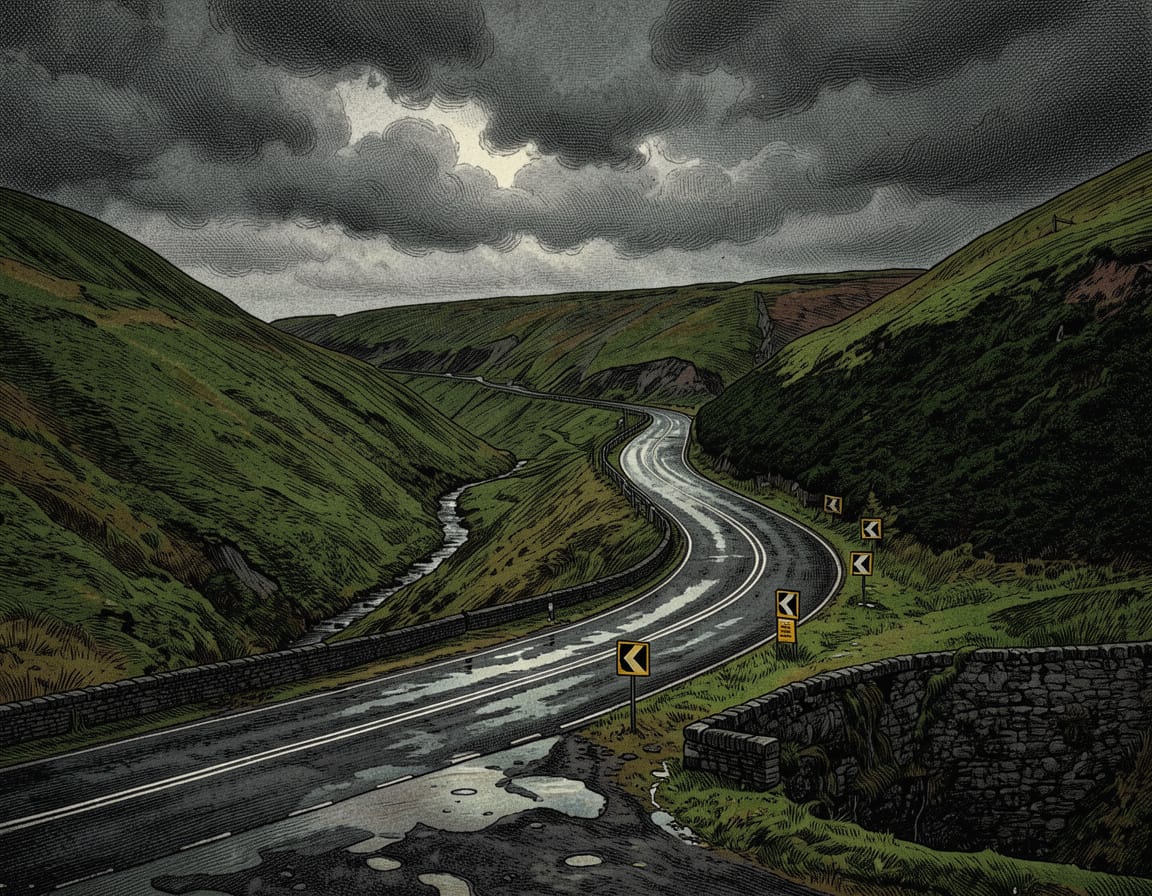
The Snake Pass is the high section of the A57 where it crosses the Dark Peak between Glossop, in Greater Manchester, and Sheffield to the east, the name usually applied to the stretch between Glossop and the Ladybower Reservoir at Ashopton. At its highest point, on the watershed between the moorland plateaux of Kinder Scout and Bleaklow, it reaches 512 metres (1,680 feet) above sea level — one of the highest classified roads in England, and among the most reliably difficult.
Snow arrives early on the pass and stays late; ice forms on the exposed ridgeline when the valley roads below are merely wet, and wind crosses the open moor without the interruption of trees or buildings. It is regularly the first of the trans-Pennine routes to be closed by winter weather, and has a poor accident record by national standards. When the pass is shut, the Sheffield–Manchester traffic is thrown onto the Woodhead Pass to the north until it reopens.